
Wednesday, 9 May 2012
End of Unit Reflection: Sexual Education
During this unit we leared about sexual education. I really enjoyed this unit because it was as well as informative. We had... stories and giggles but we also learn't alot about sexual eduaction. I would say the two things i learn't the most about was different forms of protection and the different trimesters of pregnancy. i new only a few ways of protection at the beginning of the unit but i learn't about several other ways and how to use them during times when you are sexual active. I also learnt about how the fetus develops in the womb duriung the different stages of pregnancy. I also learnt about around 13 differen't STI's and STD's. When at the beinning of the unit i could barely name four let alone tell you about them and now i fell very well informed about STD's.
Overall i really enjoyed this unit and i think everybody else did to becuase it was fun but left you very informed also if you forget some information we have our brochures and essays to look back at :) . So im glad we completed this unit and that it was part of our curriculum this year.

Monday, 9 April 2012
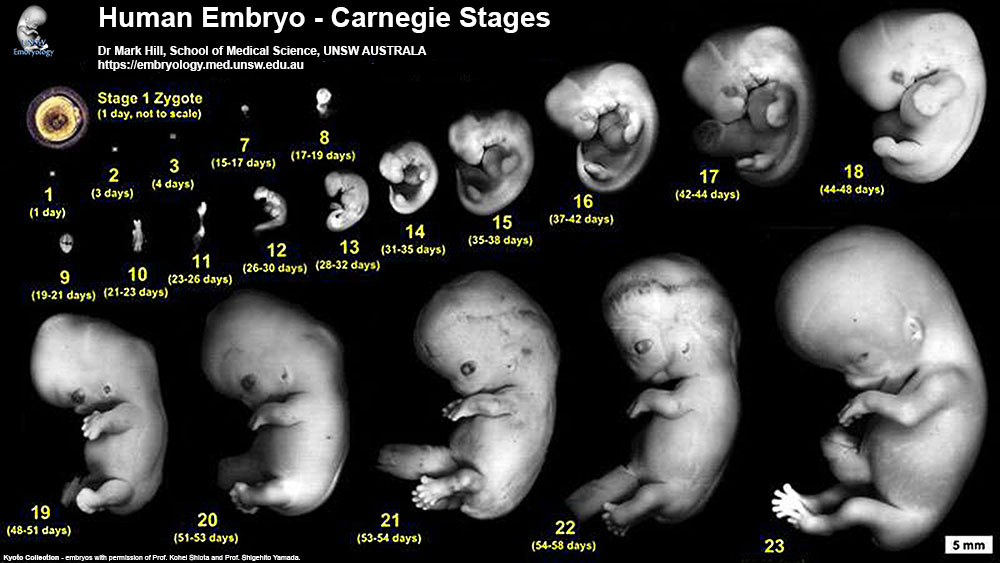
Fetal Development
What are the major events that occur during feal development?
- Limbs Grow
- Brain Develops
- Grows Rapidly
- Gains a Lot of Weight Before Birth
- Turns in Womb
- Pushes Against Womb Lining
- Develops Reflexes
How do doctor's know something is going wrong with the fetus?
- You can you ultra sounds.
- A sonogram.
- By looking at the babies movements you can also tell wheather it is in fetal distress.
- By looking at the colors of your amniotic fluid.
How does a montehr's behavior influence the development of the fetus?
What Not To Do During Pregnancy:

- Limbs Grow
- Brain Develops
- Grows Rapidly
- Gains a Lot of Weight Before Birth
- Turns in Womb
- Pushes Against Womb Lining
- Develops Reflexes
How do doctor's know something is going wrong with the fetus?
- You can you ultra sounds.
- A sonogram.
- By looking at the babies movements you can also tell wheather it is in fetal distress.
- By looking at the colors of your amniotic fluid.
How does a montehr's behavior influence the development of the fetus?
What Not To Do During Pregnancy:
- Sterioids can kill baby
-
Smoking causes bone damage and stunts growth
-
Facial abnormalities
-
Certain foods can cause damage to baby. (Bacteria,
listeria, lobster, salmon, tuna, swordfish.) à
Shouldn’t ea these fish because they have mercury in them.
-
Severe behavior àearning
disorders/social disorders.
-
Poor coordination
-
Unhealthy – prone to diseases (asthmatic,
allergies, respiratory infection.
-
Loud music à
ear functioning deficits.
-
Illegal Drugs (sometimes baby can be born with
an addiction
What To Do During pregnancy:
-
Pre-natal vitamins – Folic Acid
-
Stay calm otherwise you create a very nervous
child.
-
Create an emotional and physical connection.
Friday, 23 March 2012
DNA Fingerprinting
During the DNA fingerprinting activity it taught you how and what fingerprints are used for. Which is mainly about identifying a person (its like a DNA stamp.) It also showed you how they use enzimes to separate theand then use gel electrophoresis, through which you can see the starnd of DNA.(we did this on our felild trip :) ) Using this process you can find out who commited a crime.
In the secondlab they went more indeapther about Gel electrophoresis. IT dold you the same information basically but then it also whoed you how there are waves of DNA and theyn the acitvity shows you how they movfe (showed through an animation.)
In the bar cokde activity the way yolu find the suspect is by comparing the lines to see which one is the same as the DNA extract one. By doing this i found that the 4th suspect was the guilty one.
In the secondlab they went more indeapther about Gel electrophoresis. IT dold you the same information basically but then it also whoed you how there are waves of DNA and theyn the acitvity shows you how they movfe (showed through an animation.)
In the bar cokde activity the way yolu find the suspect is by comparing the lines to see which one is the same as the DNA extract one. By doing this i found that the 4th suspect was the guilty one.
Monday, 19 March 2012
Dominence , Co-Dominence, Incomplete Domincence
Results for Pea Plants:
- If you have a pure bred purple plant and you mix it with a white pure bred you get all purple offspring.
- When you mix a half bred
- when you put a purebred purple with a half-bred purple you get --> you get 6 purple and 2 whites.
- if you mix whites you get all white
So thus the purple pea plants are dominant and the white are recessive.
Reflection: I know that the purple plants are dominent becuase when you cross the white pea plants with white the offspring are all white. Also when you cross a purpred purple peaplant with a white you get purple pea plant .
Results for Snapdragons:
- If you mix red and red you get all red
- if you mix red and pink you get 4 pink and 4 red
- if you mix red and white you get all pink.
- if you mix pink and pink you get 4 pink, 2 red, and 2 white.
- if you mix pink and white you get 4 pink and 4 white. .
- if you mix white and whites you get all white.
thus the snapdragons are incomplete dominence
Reflection:
if you cross red with white you get pink. If you cross white with white you get white. If you cross red and red you get all red. This is a definete example of incomplete dominence. Because niether are fighting to be shown they are both neutral.
Results for Lentils:
- If you mix small seeds with big seeds you get all mixed seeds
- if you mix small seeds with small seeds you get all small seeds
- if you mix big seeds with big seeds you get all big seeds.
- if you mix mixed seeds with mixed seeds you get 4 mixed seeds, 2 small seeds, and 2 big seeds.
thus the lentils are co-dominence.
Reflection: When combining the lentils unless you are crossing two of the same you never get one dominent lentil plant shown. --> this is an example of co-dominence. You can also so this when you mix mixed seed with mixed seeds and you get 4 mixed seeds, 2 small seeds, and 2 big seeds. You can think of this as both types of lentils are to stubborn to give in so thus they are dominent together/ co-dominence.
- If you have a pure bred purple plant and you mix it with a white pure bred you get all purple offspring.
- When you mix a half bred
- when you put a purebred purple with a half-bred purple you get --> you get 6 purple and 2 whites.
- if you mix whites you get all white
So thus the purple pea plants are dominant and the white are recessive.
Reflection: I know that the purple plants are dominent becuase when you cross the white pea plants with white the offspring are all white. Also when you cross a purpred purple peaplant with a white you get purple pea plant .
Results for Snapdragons:
- If you mix red and red you get all red
- if you mix red and pink you get 4 pink and 4 red
- if you mix red and white you get all pink.
- if you mix pink and pink you get 4 pink, 2 red, and 2 white.
- if you mix pink and white you get 4 pink and 4 white. .
- if you mix white and whites you get all white.
thus the snapdragons are incomplete dominence
Reflection:
if you cross red with white you get pink. If you cross white with white you get white. If you cross red and red you get all red. This is a definete example of incomplete dominence. Because niether are fighting to be shown they are both neutral.
Results for Lentils:
- If you mix small seeds with big seeds you get all mixed seeds
- if you mix small seeds with small seeds you get all small seeds
- if you mix big seeds with big seeds you get all big seeds.
- if you mix mixed seeds with mixed seeds you get 4 mixed seeds, 2 small seeds, and 2 big seeds.
thus the lentils are co-dominence.
Reflection: When combining the lentils unless you are crossing two of the same you never get one dominent lentil plant shown. --> this is an example of co-dominence. You can also so this when you mix mixed seed with mixed seeds and you get 4 mixed seeds, 2 small seeds, and 2 big seeds. You can think of this as both types of lentils are to stubborn to give in so thus they are dominent together/ co-dominence.
Thursday, 15 March 2012
Current Events: Why Does the Same Mutation Kill One Person but Not Another?
Different people have different reactions to different gentic disorders, such as schizophrenia or breat cancer. These different affects are say 1 person has the mutations that can develop into that disease, wheas person 2 can have the same mutations and never develop the disease. THis isn't just people who have a different genetic layout and just the same mutations but studies have shown that two identical twins can even have a different outcome than the other twin. So why does this happen?
For many decades now scientific genetic researchers have been studing the role that genetic mutaions play as well as the environmental affects have on the development of diseases.As one of the more commen researchers says Alejandro Burga, "However, genetic and environmental difference are not enough. In the last decade we have larned by studying very simple organisims such as bacteria that gene exzpression -- the extent to which a gene is turned on or off -- varies greatly among individuals, evne in the abcense of genetic and evnronment variation. Tow cells are not completely identical and someimtes these differences have thier origin in random or stochasitc processes. The results of our study show that this type of variation can be an important infulence on the phneotype of animals, and that its measurment can help to reliably predict the chance of developing an abnormal phenotype such as a disease.
These recent scientistis works show that even if they managae to completely understand all of the genes that are important in the inheriting of the genetic disease. However they may have found a way to predict what will happen to each person from looking at their genome sequence. Though when doing this they need to remember that genese are turned on or off in each person.
Difference between Cytokinesis and Mitosis.

What is the difference between Cytokinesis and Mitosis? How do they go together in order to complete the cell division process?
part 1. Can you find dividing cells in the oinion root tip?
What differences can you seewhen you compare the nucleus of a dividing cell with that of a non-dividing cell?
Answer: The non-dividingcells appear as though they have been split in half. As for the developing telophasse stage most of the cells are blury and more condensed.
Part 2. View a video of mitosis in an animal cell.
Part 3. Identify at least one cell in each of the stages of division summarized in the review.
Place the cursor over a dividing cell and click once. Identify the stage of division.
When you have identified at least one cell in each stage, proceed to the next section.
Part 4. See what differences you can detect between the division of an animal cell and a plant cell.

Friday, 9 March 2012
Genes With Marbles

1. For the first trail, when y oucressed the B's and b's the result is always the same, you will always get Bb. If you make a punett square for this then you see that the results also come out as Bb. Thus the punet square is reliable for this part.
2. During the next part one of the bags contained a B and a b. For the second bag there was only a B and a B. When making a punet square out of this information you will get a 50% liability of the trait for each one.
3. For this 3rd step i got 3 different outcomes, Bb, bb, and BB. Using the punet square we predicted that we would get Bb 50%, bb 25%, and BB 25%.However once doing the experiment we got a larger precentage of bb rather than Bb as predicted. This prove sthe more complex your experiment then the less reliable the punett square becomes.
4. I only used 10 trials but during experiments like these it is more reliable and accurate if you use much more trials (prehaps over 100). Thus more statistics will be proved rather than 'luck of the draw'.
5. Looking at the model there is a higher chance and probability of pulling out a certain marble. However with a punnet square you have a completely accurate probablity if you keep it relitively simple. Whereas with models as i said before you need to be careful with 'luck of the draw.' So i think punnet squares are definetly more reliable.
Subscribe to:
Posts (Atom)